
Open Cell Spray Foam
- Expands significantly during application
- Cures into a softer, lighter material
- Approximately R 3.6 to R 4.5 per inch, depending on the product
- Broad coverage within appropriate wall, roofline and attic assemblies
Insulation
Improve insulation and reduce unwanted air movement with professionally installed open cell and closed cell spray foam for appropriate attics, rooflines, walls and other residential applications throughout Coastal Georgia.
Get a Free Estimate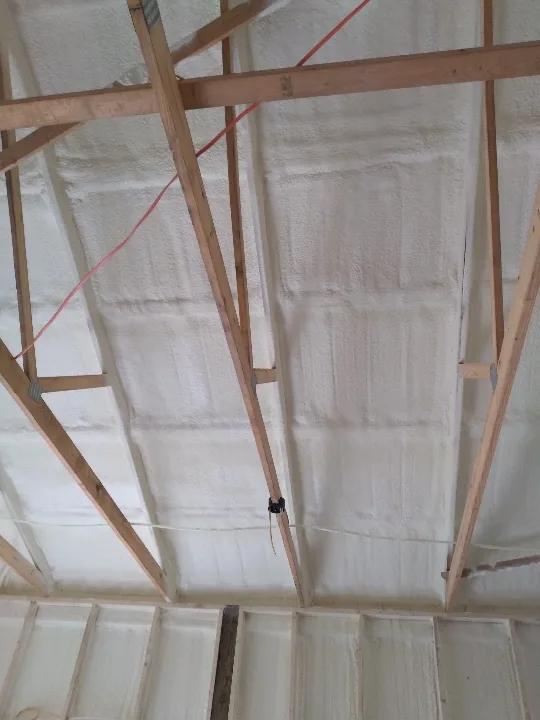
Conventional insulation can leave difficult transitions and irregular cavities exposed. Spray foam expands after application, allowing it to follow the shape of attics, walls, floors, basements, crawl areas, and other suitable assemblies. Roof Doctors evaluates the space, project goals, and surrounding materials before recommending an open-cell or closed-cell system.
Compare the Options
Choosing between open cell and closed cell spray foam isn’t simply a matter of deciding which one is “better.” They have different densities, thermal characteristics and moisture vapor properties, which can make each appropriate for different applications.
The correct choice depends on the location, available space, existing construction and overall goals of the project.
Not sure which type you need?
Let Roof Doctors evaluate your home.
Coastal Georgia Attics
Your attic sits directly between your living space and one of the hottest parts of your home.
During a Coastal Georgia summer, the roof and attic are exposed to intense sun, high temperatures and humidity for hours at a time. Gaps and air leakage within the building envelope can also allow conditioned and unconditioned air to move where you don’t want it.
Spray foam insulation can provide both insulation and air sealing when it is installed as part of an appropriately designed attic or roof assembly. Unlike insulation materials that are simply laid into place, spray foam expands during application and follows irregular surfaces, allowing it to seal many of the gaps and transitions within the area being treated.
Existing ventilation, roof construction, moisture conditions, HVAC equipment and current insulation all need to be considered before deciding where spray foam belongs. That is why Roof Doctors evaluates the attic before recommending open cell or closed cell spray foam.
Thinking About Spray Foam for Your Attic?
Request an evaluation before deciding which insulation system is right for your home.
Request an Evaluation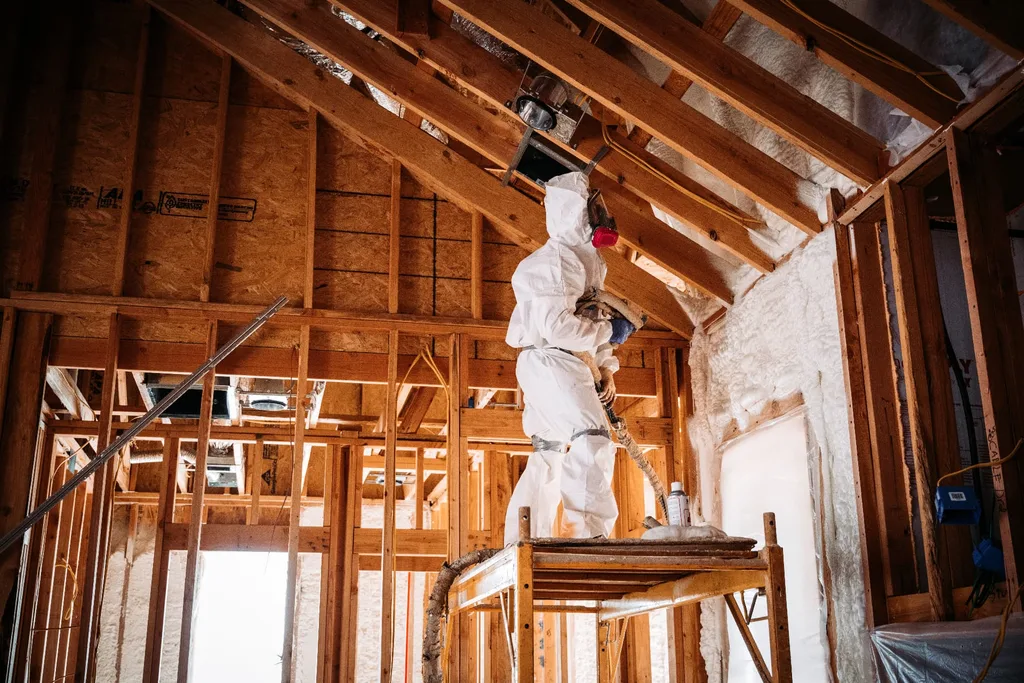
Thermal Resistance
R value measures a material’s resistance to heat flow. Generally, the higher the R value, the greater the insulating resistance. Closed cell spray foam usually provides a higher R value per inch than open cell foam.
Typical industry ranges
R value is only part of the insulation conversation. Installation thickness, air sealing, the surrounding building assembly and the quality of the installation all affect how the completed system performs. Choosing insulation based solely on the highest R value per inch doesn’t necessarily identify the best option for every home.
How It Works
Our licensed and insured team reviews the assembly, accessible conditions, and intended use of the space.
Surfaces are prepared and the appropriate open-cell or closed-cell formulation is applied in controlled passes.
The expanding foam fills planned cavities and cures into a continuous insulation and air-sealing layer.
Material Comparison
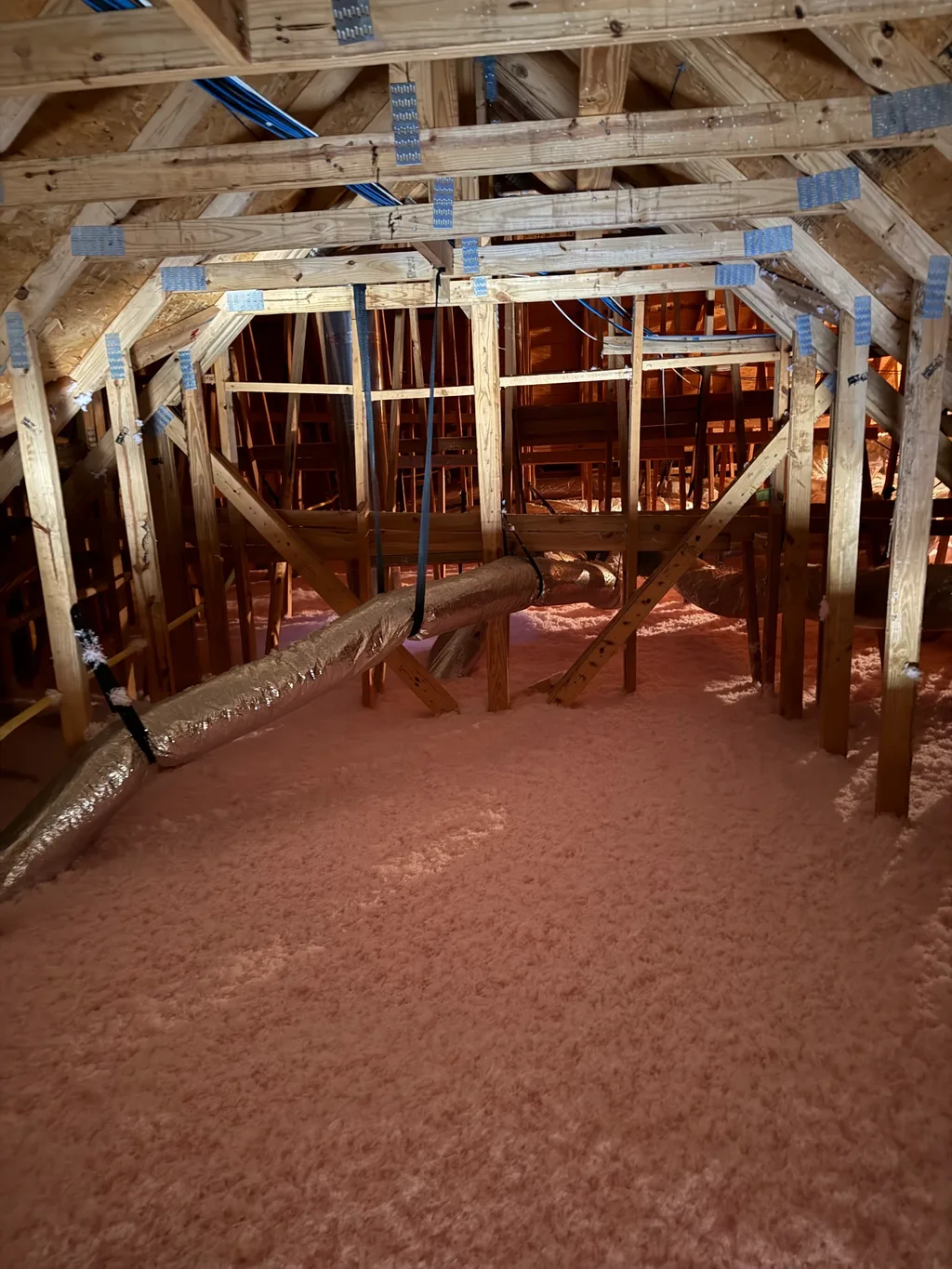
One of the most common questions homeowners ask is whether spray foam is better than fiberglass insulation. The answer depends on the home and the application — spray foam and fiberglass insulate in different ways.
Expands during application and can create an insulation layer that also limits air movement when correctly installed at the appropriate thickness.
May make more sense when air sealing, limited cavity depth, irregular surfaces or the design of the roof or wall assembly make its characteristics valuable.
Provides thermal resistance but is air permeable, so air sealing may need to be handled separately.
Fiberglass batt or blown-in fiberglass can be an excellent choice for many attic applications and may offer a more economical approach when the home’s construction and project goals make it appropriate.
At Roof Doctors, we offer both spray foam and fiberglass insulation. That allows us to recommend an insulation approach based on the home rather than trying to make one product fit every project.
Compare Your Insulation OptionsPricing
There isn’t one meaningful square foot price that applies to every spray foam project. The cost of professional spray foam insulation can vary based on:
A large open attic can be very different from a tight roofline or a project requiring old insulation removal before the new system can be installed. The most useful comparison is therefore not simply the advertised price of foam per square foot — compare the complete scope of work, including preparation, insulation type, installed thickness, areas being treated and any additional work required before installation.
Roof Doctors evaluates the space first and provides an estimate based on the actual project.
Request a Spray Foam EstimateSpray foam kits are readily available online and in home improvement stores, which can make installing spray foam look like a simple DIY project. Small cans of expanding foam used to seal individual gaps are very different from installing a complete spray polyurethane foam insulation system across an attic or roofline.
Professional application requires consideration of product ratios, substrate conditions, application thickness, ventilation, personal protective equipment and curing requirements. Voids, inconsistent thickness and inappropriate application can affect the completed insulation system.
There are also safety considerations: spray polyurethane foam contains chemicals that require appropriate handling, ventilation and protective equipment while the product is being applied and cured. For a complete attic, roofline or other substantial project, professional installation removes a lot of guesswork.
Yes, spray foam can be considered for many existing homes, but older homes deserve careful evaluation before insulation is added. Adding insulation without first understanding existing moisture conditions, roof construction, ventilation and previous insulation can create unintended problems.
Roof Doctors evaluates the existing space before recommending a system. In some homes, old insulation may need to be removed first. In others, fiberglass, air sealing or another solution may be more appropriate than spray foam.
The objective isn’t simply to add more insulation. It is to determine what the home actually needs.
Potential Benefits
What To Expect
Tell us what you are noticing. We will evaluate the relevant roof, insulation, or attic conditions.
We explain the options that fit what we find and provide an estimate for the recommended work.
If you choose to move forward, the work is scheduled for an agreed date.
After service, we review the completed work with you and answer remaining questions.
Why Roof Doctors for Insulation
Roof Doctors doesn’t offer only one type of insulation. We provide open cell spray foam, closed cell spray foam, fiberglass batt insulation, blown-in fiberglass, insulation removal and air sealing.
Not every attic or home should receive the exact same solution. Our job is to evaluate the property, understand what you’re trying to accomplish and recommend the approach that makes sense for the space.
Serving Savannah, Coastal Georgia and the South Carolina Lowcountry.
Spray foam isn’t automatically the answer to every insulation problem.
We can evaluate insulation, air leakage, attic ventilation and related conditions rather than looking at one material in isolation.
We explain what we find, the options available and the work we’re recommending before the project begins.
Common Questions
Open-cell foam is softer and more flexible, while closed-cell foam is denser and typically provides greater thermal resistance per inch and stronger resistance to air and moisture movement. The right choice depends on the assembly and project goals.
Depending on the building and assembly, applications may include attics, walls, floors, basements, and crawl areas. Roof Doctors evaluates the space before recommending a system.
No. Spray foam can help control air and moisture movement in a suitable assembly, but leaks, drainage, flooding, mold, and structural concerns require their own evaluation and corrective work.
Closed cell spray foam commonly falls in approximately the R 5.8 to R 6.9 per inch range, depending on the product. The manufacturer's specifications for the exact foam being installed are the final reference.
Neither is automatically better. The appropriate material depends on the attic or roof assembly, desired R value, available installation depth, moisture considerations and overall project design.
Cost varies according to foam type, installation thickness, square footage, access, preparation and other project requirements. An onsite evaluation provides a more useful estimate than a generic square foot price.
They have different advantages. Spray foam combines insulation with air sealing when correctly installed, while fiberglass can provide an effective and economical thermal insulation system. Roof Doctors offers both and can recommend the appropriate option for the home.
Reducing uncontrolled air leakage and improving insulation can reduce heating and cooling demand, but actual results depend on the home, existing insulation, HVAC equipment, how the home is used and other factors.
It depends on the project. Existing insulation condition, installation location and the proposed building assembly need to be evaluated first. In some cases, existing material should be removed before a new system is installed.
Spray foam should not be treated as waterproof. Closed cell spray foam has considerably greater resistance to water vapor and liquid water than open cell foam, but roof leaks and exterior water management still have to be addressed separately.
No. Consumer gap fillers and small kits differ substantially from professionally installed high pressure systems used for larger insulation applications.
Occupants should follow the manufacturer's reoccupancy requirements for the specific product being installed. These times vary, so Roof Doctors reviews the appropriate instructions with homeowners before work begins.
Service Area
Roof Doctors of Georgia is locally owned and operated, providing spray foam insulation services throughout Savannah, Coastal Georgia and the South Carolina Lowcountry.
We serve homeowners in Savannah, Wilmington Island, Tybee Island, Skidaway Island, Garden City, Bloomingdale, Pooler, Rincon, Richmond Hill, Midway and Townsend, Georgia, along with Bluffton, Okatie and Hardeeville, South Carolina.
Whether you are improving an existing attic, renovating an older home or evaluating insulation options for another area of your property, our team can help you compare the available solutions.
Related Services