Exterior Walls
Fitted between wall studs during new construction, renovations or projects where the wall cavity is open and accessible.
Insulation
Professional fiberglass batt insulation for walls, ceilings, floors and other framed spaces throughout Savannah, Coastal Georgia and the South Carolina Lowcountry. Proper fitting matters, and Roof Doctors makes sure each section is installed for consistent coverage.
Get a Free Estimate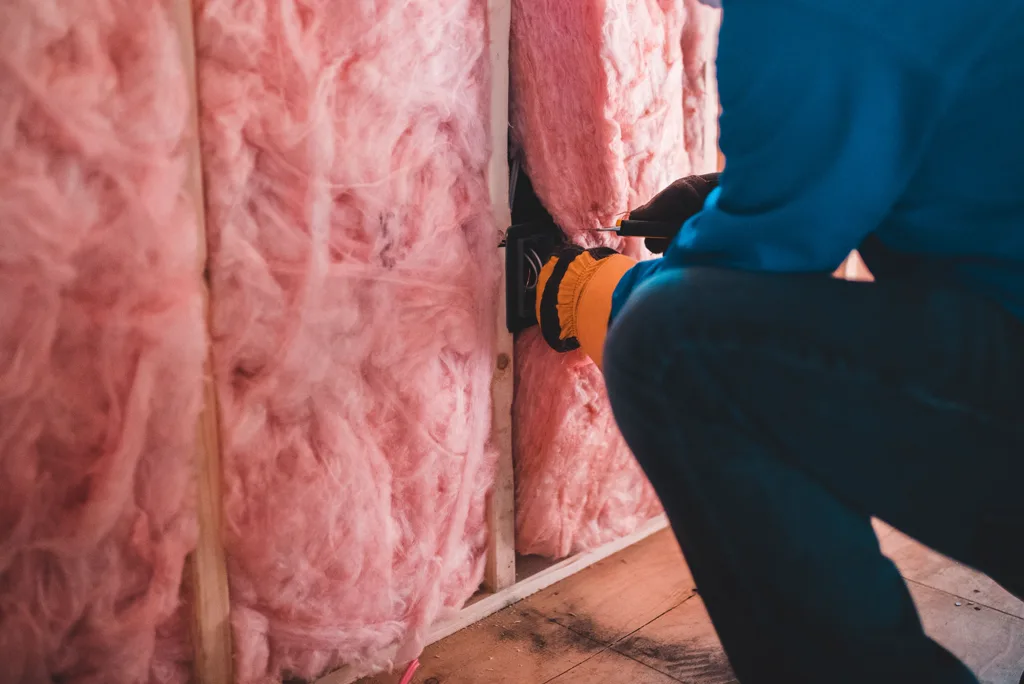
Fiberglass batts are designed for defined spaces between studs, joists, and rafters. They can serve walls, ceilings, floors, new construction, retrofits, and focused upgrades, but performance depends on complete contact with the cavity. Gaps, folds, and excessive compression can create weak points that reduce effectiveness.
Applications
Fiberglass batts are manufactured in pre cut or rolled sections designed to fit between framing members. That makes them useful in many areas of a home where the framing creates defined cavities.
Fitted between wall studs during new construction, renovations or projects where the wall cavity is open and accessible.
Installed between ceiling joists in appropriate vented attic assemblies.
Used in framed ceiling cavities where the assembly and access make batts appropriate.
Installed between floor joists where insulation is needed between conditioned and unconditioned spaces.
Crawlspaces and other framed areas: certain applications may also benefit from batt insulation when the cavity dimensions and moisture conditions are appropriate. ENERGY STAR lists fiberglass batt and roll insulation as suitable for unfinished walls, floors and ceilings.
R Value
R value measures how well an insulation material resists heat flow. The higher the R value, the greater the material's thermal resistance.
Fiberglass batts come in different densities and thicknesses, so there is not one universal R value for every batt. The important part is matching the insulation to the cavity and the needs of the home rather than simply choosing the highest number available.
≈ R 3.2
per inch
ENERGY STAR's general reference for estimating existing fiberglass batts. Actual installed R value should always be based on the manufacturer's labeled product.
Climate Zone 2A
Savannah is in Climate Zone 2A, which is classified as warm and humid. ENERGY STAR's retrofit guidance for Climate Zone 2 recommends approximately the levels shown here.
These are general retrofit recommendations, not a substitute for determining the exact requirements of a specific home or local code. The right level depends on the existing attic, how much insulation is already present, the type of assembly and what the homeowner is trying to improve. Roof Doctors evaluates the existing conditions before recommending how much insulation should be added.
R 49
When an attic currently has no insulation.
R 38
When an attic already has roughly 3 to 4 inches of insulation.
Find Out What Your Attic Needs
Get a Free EstimateInstallation
Fiberglass batt insulation performs best when it completely fills the intended cavity without avoidable gaps, folds or excessive compression. The Department of Energy notes that batts should fill the cavity without gaps, pinching or compression to achieve their intended performance.
That is why fiberglass batt insulation may look simple, but careful installation makes a meaningful difference.
How It Works
Our team reviews the framing, cavity depth and existing conditions.
Batts are selected for the application and cut around wiring, pipes, and other obstructions.
Each section is fitted evenly so the planned area has consistent coverage without avoidable gaps or compression.
Facing
Fiberglass batts are available with or without a facing material. The correct choice depends on the location and construction of the home.
Faced batts may include kraft paper or another facing material that can function as a vapor retarder in certain assemblies. Whether faced insulation is appropriate depends on where it is being installed and how the wall, ceiling or attic assembly is designed.
Unfaced batts do not include the paper or foil layer. They are commonly used when adding insulation over existing insulation or in assemblies where a separate vapor retarder is not required. ENERGY STAR advises that fiberglass added over existing loose fill attic insulation should be unfaced so moisture is not trapped between layers.
Batt vs. Blown In
Both products use fiberglass, but they are installed differently.
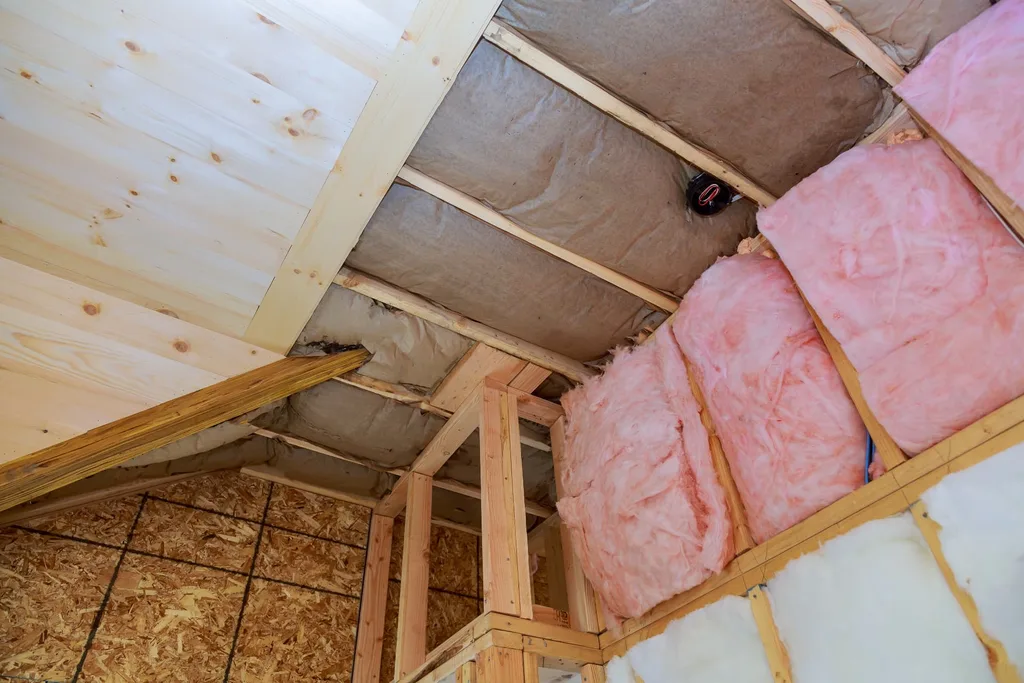
Pre cut or rolled sections that work best in open, regularly spaced framing cavities where the material can be fitted carefully.
Loose fill material installed with specialized blowing equipment. ENERGY STAR lists loose fill fiberglass as especially well suited for unfinished attic floors and hard to reach areas. Learn more about blown in fiberglass insulation.
Neither method is automatically better. The shape of the space, existing insulation, access and project goals help determine which approach makes more sense.
Compare Batt and Blown In Insulation
Get a Free EstimateBatt vs. Spray Foam
Homeowners often compare fiberglass batts and spray foam because both can be used in wall, ceiling and attic applications. But they work differently.
Provides thermal resistance when correctly fitted into the cavity. Batts do not function as an air barrier by themselves, so air sealing often needs to be addressed separately.
Expands during application and can provide both insulation and air sealing when correctly installed as part of an appropriate assembly. It generally involves a different installation process and project cost. Explore spray foam insulation.
At Roof Doctors, we offer both systems. That allows us to recommend the insulation approach based on the home rather than trying to make one material fit every situation.
Pricing
The cost of fiberglass batt insulation depends on more than the price of the material. A small open wall project is very different from insulating a large attic or difficult framing system.
Roof Doctors provides estimates based on the actual conditions of the property rather than a generic square foot price.
Request a Fiberglass Insulation Estimate
Get a Free EstimateDIY vs. Pro
Fiberglass batts are one of the more accessible insulation materials for homeowners, but installing them correctly still takes planning. A successful installation involves more than laying insulation into an opening.
Attic work also introduces hazards such as exposed nails, electrical components and the risk of stepping between joists and falling through the ceiling. Professional installation becomes especially valuable when the attic is difficult to access, old insulation needs to be removed, air sealing is required or the framing creates complicated fitting conditions.
Safety
Fiberglass can irritate the skin, eyes and respiratory tract during handling and installation.
OSHA generally recommends protective clothing such as long sleeves and long pants, gloves and head covering when working with fiberglass. Eye or respiratory protection may also be necessary depending on exposure. NIOSH also identifies the eyes, skin and respiratory system as potential exposure concerns, and ENERGY STAR recommends protective clothing, gloves and other precautions for homeowners working in the attic.
This is another reason homeowners may prefer professional installation for larger projects.
Potential Benefits
What To Expect
Tell us what you are noticing. We will evaluate the relevant roof, insulation, or attic conditions.
We explain the options that fit what we find and provide an estimate for the recommended work.
If you choose to move forward, the work is scheduled for an agreed date.
After service, we review the completed work with you and answer remaining questions.
Coastal Georgia
Coastal Georgia homes experience long cooling seasons, high humidity and substantial attic heat, which makes the condition of the attic insulation especially important.
Fiberglass batts can be a practical option when the attic framing is open and accessible and the material can be installed without significant gaps or compression. But insulation alone is not always the complete solution. Air leakage, uneven existing insulation and attic ventilation can also affect how the space performs.
Roof Doctors can evaluate the entire attic and determine whether fiberglass batts, blown in fiberglass, air sealing or another solution is the best fit for the home.
Why Roof Doctors
We provide fiberglass batts, blown in fiberglass, open cell spray foam and closed cell spray foam, so we can compare solutions instead of automatically recommending one material.
Batt insulation depends on fit. We take the time to work around framing, plumbing, electrical components and other obstacles to create consistent coverage.
Insulation, air sealing and ventilation can all influence attic performance. We look at the conditions of the space rather than focusing on one product alone.
Roof Doctors serves Savannah, Coastal Georgia and the South Carolina Lowcountry.
Common Questions
It is fiberglass insulation supplied in pre-cut or rolled sections that fit between framing members such as studs, joists, and rafters.
Gaps and compression interrupt coverage and can reduce the insulation’s effectiveness, so careful cutting and placement are important.
Yes. It can suit residential and commercial walls, ceilings, floors, and other framed areas when the assembly and access support proper installation.
The R value depends on the specific product, thickness and density. ENERGY STAR uses approximately R 3.2 per inch as a general estimate for existing fiberglass batts, but the manufacturer's labeled R value should be used for new insulation.
Savannah is in Climate Zone 2A. ENERGY STAR retrofit guidance generally recommends R 49 for an uninsulated attic or R 38 when an attic already has roughly 3 to 4 inches of insulation. Exact needs depend on the home and applicable local requirements.
Yes. Batts are commonly used in open framed wall cavities where they can be properly fitted between studs.
Yes. They may be installed on appropriate attic floors or in other framed assemblies when the design allows correct placement.
Faced insulation includes a kraft paper or similar facing that may serve as a vapor retarder in certain assemblies. Unfaced batts do not have that layer and may be used where a facing is not required.
Neither is automatically better. Batts work especially well in accessible framed cavities, while blown in fiberglass can provide coverage in open attic floors or irregular areas.
They serve different purposes. Fiberglass provides thermal insulation, while spray foam can provide both insulation and air sealing when correctly installed. The best option depends on the project.
Insulation can help with thermal performance, but fiberglass itself is not an air barrier. Drafts may require separate air sealing.
Some homeowners do, but proper cutting, fitting, ventilation clearance and attic safety all matter. Professional installation can be useful when the project is complex or difficult to access.
Fiberglass fibers can irritate the skin, eyes and respiratory tract during handling. Appropriate protective measures should be used during installation.
Service Area
Roof Doctors of Georgia provides fiberglass batt insulation throughout Savannah, Coastal Georgia and the South Carolina Lowcountry. Whether you are insulating an attic, renovating an existing home or improving open wall or ceiling cavities, Roof Doctors can evaluate the project and recommend the appropriate insulation approach.
Ready to talk about your project?
Request a Free EstimateRelated Services