Rodent Activity
Urine, droppings, nesting materials and other residue can leave odors behind even after rodents are no longer active.
Attic & Home Efficiency
Professional Attic Fresh enzyme treatment for lingering attic odors associated with rodent activity, nesting materials, animal waste and other organic matter throughout Savannah, Coastal Georgia and the South Carolina Lowcountry.
Get a Free Estimate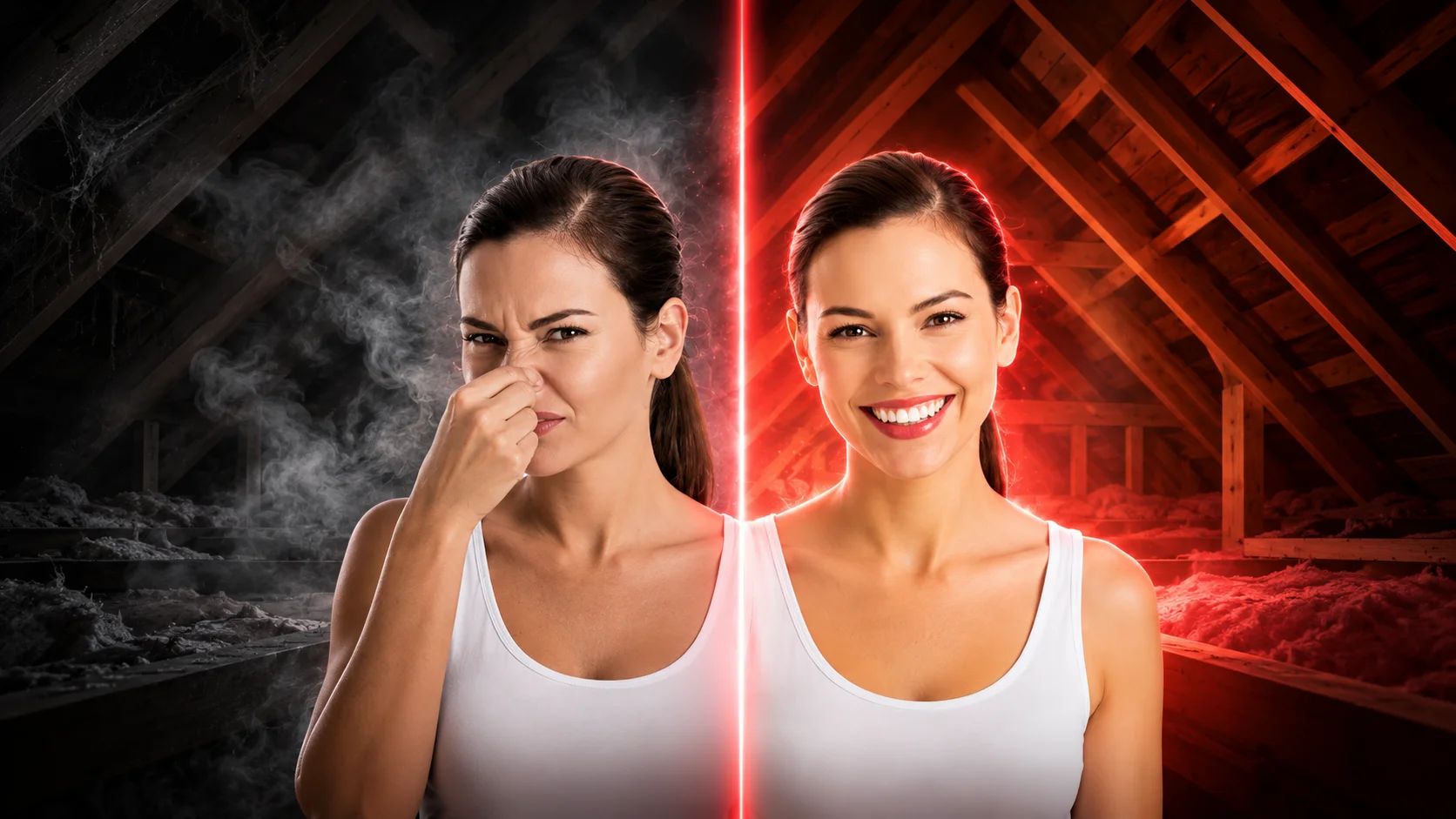
Rodent activity, nesting materials, animal waste, bacteria, and similar organic contaminants can leave persistent odors. Attic Fresh is intended for odor-causing organic matter after active pests, moisture, or other underlying issues have been handled.
Why Does My Attic Smell?
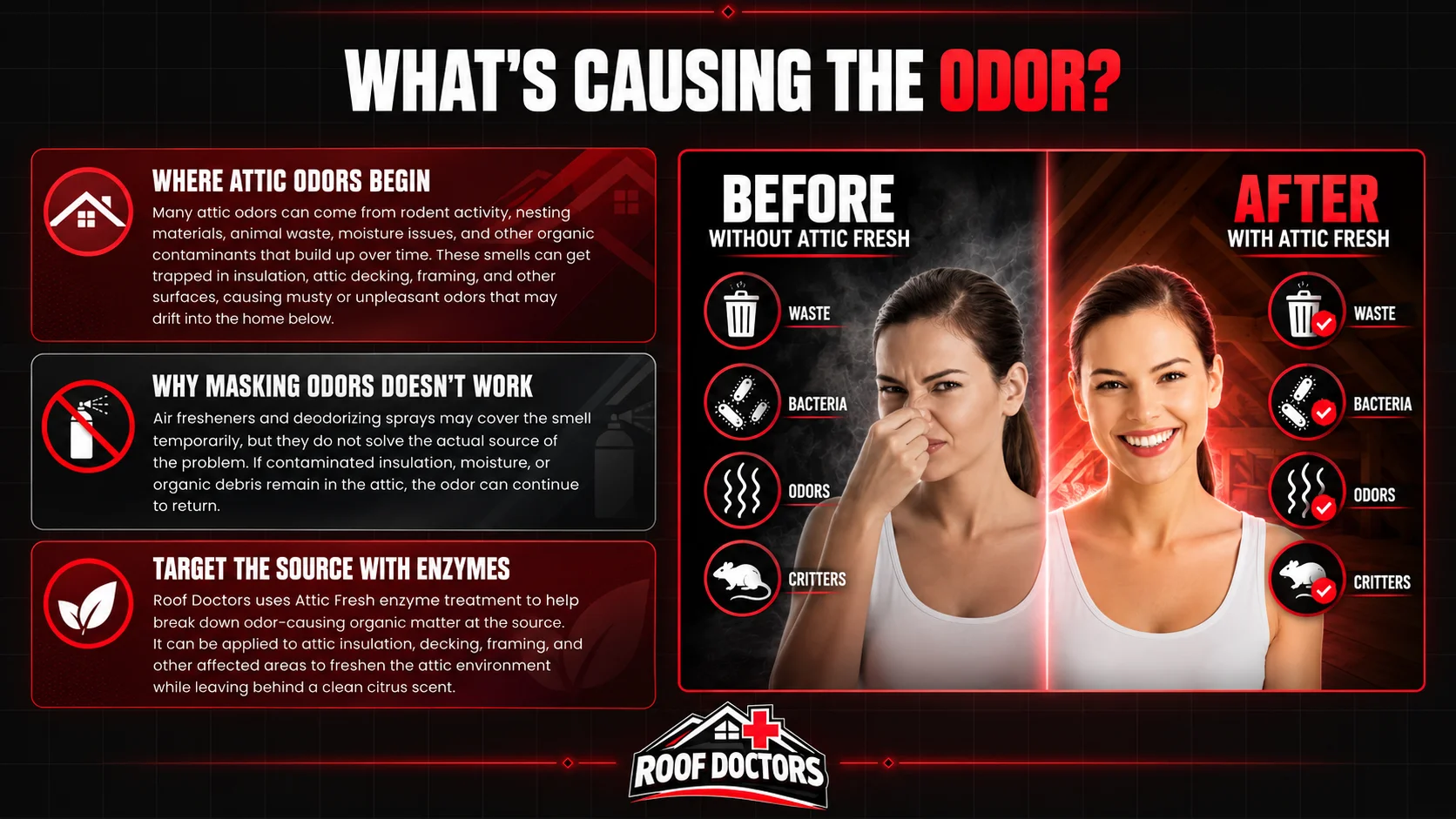
A persistent smell in the home does not always start in the living space. Attics can collect organic material and contaminants over time, particularly after animal or pest activity.
Urine, droppings, nesting materials and other residue can leave odors behind even after rodents are no longer active.
Waste left by rodents or other animals can hold odor in insulation and on attic surfaces.
Organic nesting debris can remain hidden within insulation and around framing.
Insulation can hold odors when it has been affected by animal waste, moisture or other contaminants.
Leaks and elevated moisture can contribute to musty odors. The moisture problem needs to be corrected before an odor treatment is expected to provide a lasting result.
Organic material that remains in an attic, including dead animals or other remains, can keep producing odors as it breaks down. Physical sources need to be removed first.
Attic Fresh is designed to address odor-causing organic matter, not simply cover it with fragrance. The manufacturer identifies rodent activity, animal waste, nesting materials and other organic contaminants as common attic odor sources.
The Product
Roof Doctors uses Attic Fresh by The Attic Depot, a professional bio-enzymatic attic odor treatment designed to help break down odor-causing organic matter.
According to the manufacturer, the formula works on odor-causing organic material on appropriate attic surfaces rather than simply masking the odor. It can be applied to areas such as:
The treatment leaves a citrus scent while the enzyme process works on the organic odor source.
Attic Fresh should not be used as a substitute for correcting the original problem.
If rodents are still active, a roof is leaking, contaminated insulation needs removal or another source remains in the attic, that issue should be addressed first.
Masking vs. Treating
There is a difference between making an attic temporarily smell better and addressing what is causing the odor. An air freshener may cover an unpleasant smell for a while. An enzyme treatment is intended to interact with the odor-causing organic material itself.
But even an enzyme treatment cannot overcome an active source that has not been corrected. That's why Roof Doctors starts by evaluating the attic rather than simply spraying a deodorizer and leaving.
“Treat the Source. Don't Just Cover the Smell.”
Rodent Odors
Rodent activity is one of the most common reasons an attic develops a persistent odor. Even after the animals are gone, the attic may still contain:
The first step is making sure the active rodent problem has been addressed. Then the attic can be evaluated to determine which materials should be removed and which appropriate surfaces can be treated.
The CDC recommends special precautions around rodent waste. Droppings and urine should not be swept or vacuumed while dry, because that can cause contaminated material to become airborne.
The CDC recommends wetting contaminated material with an appropriate disinfectant before cleanup, and notes that exposed insulation contaminated with rodent urine or droppings should be bagged for removal.
Insulation
Not always. The manufacturer states that Attic Fresh can be applied over appropriate existing insulation as well as directly to exposed wood and attic surfaces. But that does not mean contaminated or damaged insulation should automatically stay. Removal may make more sense when insulation is:
Roof Doctors can evaluate the existing insulation and determine whether treatment alone is appropriate or whether insulation removal should be part of the project.
Not sure what your attic needs first?
Request an Attic EvaluationHow It Works
The odor concern and accessible attic conditions are reviewed.
Underlying sources requiring separate pest, moisture, or repair work should be addressed first.
Enzyme-based treatment is applied to appropriate affected areas.
Attic Restoration
This is one of the most logical times to treat an attic. Once old insulation is out, lingering odors on the exposed surfaces can be treated before new insulation goes in.
Contaminated or unsuitable insulation is removed when necessary, after the odor source and any active pest or leak issues are addressed.
The previously covered attic floor, joists and framing become accessible for a closer look.
If lingering organic odors remain, Attic Fresh is applied to appropriate affected surfaces.
This is often the best time to address accessible gaps before they are covered again.
The appropriate replacement insulation is installed once the attic is ready.
Related work: Insulation Removal, Home Air Sealing, Blown-In Fiberglass, Fiberglass Batt and Spray Foam Insulation.
Dead Animal Odors
The physical source needs to be removed first. An enzyme treatment should not be used as a substitute for locating and removing an animal carcass or other organic material that can physically be taken out of the attic.
After the source is gone, treatment may help address residual organic odor remaining on affected attic materials.
Musty Odors
A musty odor deserves investigation. Moisture can enter an attic from roof leaks, plumbing leaks, indoor air leakage, improperly vented exhaust fans and other conditions.
An enzyme treatment can address qualifying odor-causing organic material, but it does not fix a roof leak, moisture intrusion or ventilation problem. If the odor is tied to moisture, the source should be found and corrected first.
Attic odor treatment is not mold remediation. If mold is suspected, it should be evaluated separately rather than sprayed over with an odor product.
Odor Pathways
The attic and living space are supposed to be separated, but many homes have openings between the two. The manufacturer notes that attic odors can move into living areas through air leaks and attic access points. Potential pathways include:
If attic odors are entering the home, treating the odor source may not be the entire solution. Roof Doctors can also evaluate whether home air sealing or an improved attic hatch cover makes sense.
Know the Difference
Attic Fresh treats qualifying odor sources. It does not keep rodents out of the attic and does not eliminate an active infestation. If animals are still getting in, the entry problem should be addressed before restoration work is completed. The CDC also recommends sealing openings around a home to help prevent rodents from returning.
Attic Fresh should not be presented as professional mold remediation. Musty odors may be associated with moisture or microbial growth, but the source and extent of the problem need to be understood. If specialized mold remediation is required, that work should be handled separately before the attic is restored.
The manufacturer markets Attic Fresh as an attic enzyme treatment and odor control product focused on breaking down organic waste and neutralizing odor sources. Roof Doctors describes this service as an enzyme-based attic odor treatment. We don't claim it kills specific bacteria, viruses, germs or pathogens; the EPA requires those claims to be supported by product registration and labeling.
Timing
There is no single timeframe for every attic. The citrus scent is noticeable after application, while the enzyme treatment is designed to keep working on organic material over time. Results can depend on:
Returning Odors
An odor can return if the original source returns. Examples include:
That is why source control matters more than applying something that smells fresh.
Cost
Pricing depends on the actual attic conditions. Factors can include:
Roof Doctors evaluates the attic first and provides an estimate based on the work actually required.
Find out what's behind the smell before you treat it.
Request an Attic EvaluationDIY vs. Professional
Spraying a fragrance into the attic may make the space smell different for a while, but it does not tell you why the odor is there. Professional attic odor treatment starts by working out what happened:
Those questions matter more than choosing the strongest-smelling spray.
The CDC advises against sweeping or vacuuming dry rodent droppings and recommends appropriate disinfection and protective precautions during cleanup.
Potential Benefits
What To Expect
Tell us what you are noticing. We will evaluate the relevant roof, insulation, or attic conditions.
We explain the options that fit what we find and provide an estimate for the recommended work.
If you choose to move forward, the work is scheduled for an agreed date.
After service, we review the completed work with you and answer remaining questions.
Why Roof Doctors
Roof Doctors of Georgia is licensed and insured.
We do not treat an active pest, leak or contamination problem as if fragrance alone will solve it.
We also provide insulation removal, air sealing, replacement insulation, solar attic ventilation and attic hatch solutions.
We use Attic Fresh, a bio-enzymatic product developed for professional attic applications and organic odor sources.
We serve homeowners throughout Savannah, Coastal Georgia and the South Carolina Lowcountry.
See also: Solar Attic Fans and Attic Hatch Covers.
Common Questions
It is intended for odor-causing organic matter associated with rodent activity, nesting debris, bacteria, animal waste, and similar contaminants.
No. Active pest issues need to be addressed separately before odor treatment.
Not always. Contaminated or damaged insulation may need removal before the area is treated and restored.
Common sources include rodent activity, animal waste, nesting material, contaminated insulation, organic debris and moisture related conditions.
The manufacturer describes Attic Fresh as a bio-enzymatic treatment formulated to help break down odor-causing organic matter rather than simply masking the odor.
The manufacturer states that it can be applied to appropriate existing insulation as well as decking and wood surfaces. Heavily contaminated or damaged insulation may still require removal.
It depends on the level of contamination. The CDC recommends removing exposed insulation contaminated with rodent urine and droppings.
No. Active pest issues need to be addressed separately.
Attic Fresh is formulated to address organic odor sources associated with rodent activity. Results depend on whether the source has been corrected and whether contaminated materials also need removal.
The animal or physical organic source should be removed first. Treatment can then be considered for residual odor on affected attic materials.
It should not be represented as mold remediation. Moisture and suspected mold conditions need separate evaluation.
Odors may move through attic access openings and other air leakage pathways between the attic and living space.
Air sealing can reduce appropriate uncontrolled pathways between the attic and living space, although the odor source itself should still be addressed.
There is no universal timeframe. The product leaves a citrus scent after application while the enzyme treatment works on organic material over time.
Yes, particularly if the underlying source returns or was never fully addressed.
Cost depends on attic size, contamination, accessibility, insulation condition and whether other restoration work is required.
Service Area
Roof Doctors of Georgia provides attic odor treatment throughout Savannah, Coastal Georgia and the South Carolina Lowcountry. Whether the odor followed rodent activity, contaminated insulation or another organic source, our team can evaluate the attic and help determine what needs to happen before treatment.
Locally Owned & Operated. Licensed & Insured.
Related Services