
Water Damage
Roof leaks, plumbing problems or other moisture sources can leave insulation wet, compressed or deteriorated. The moisture source should be addressed before new insulation is installed.
Insulation
Professional removal of old, damaged or unsuitable attic insulation throughout Savannah, Coastal Georgia and the South Carolina Lowcountry. Start with a cleaner, accessible space before air sealing, repairs or new insulation are completed.
Get a Free Estimate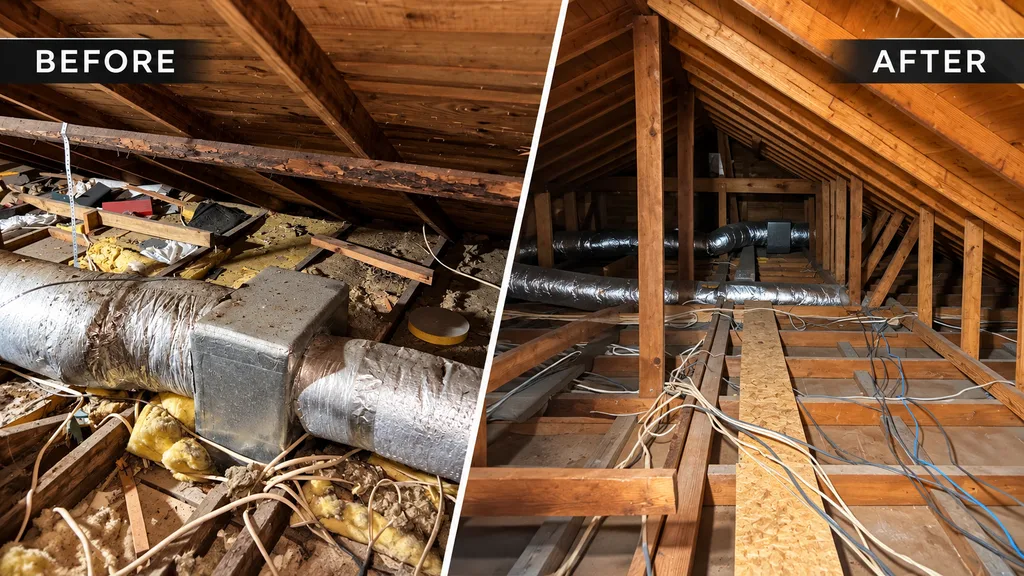
Old insulation may be damaged by pests, contamination, or moisture concerns, or it may have settled and degraded over time. Renovations and recurring comfort or energy issues can also make removal the responsible first step. Roof Doctors can remove common materials such as fiberglass batts, loose-fill cellulose, and spray foam where the conditions and access make removal appropriate.
The Basics
Old insulation does not automatically need to be removed simply because it has been in the attic for years. In many homes, existing insulation can remain in place and additional insulation can be installed when conditions are appropriate. There are situations, however, where removal makes more sense.
Insulation removal may be recommended when the existing material is:
Roof leaks, plumbing problems or other moisture sources can leave insulation wet, compressed or deteriorated. The moisture source should be addressed before new insulation is installed.
Rodents and other animals can disturb insulation and leave nesting material, waste and debris behind. The pest problem should be corrected before insulation replacement begins.
Visible mold or significant moisture conditions deserve further evaluation rather than simply being covered with another layer of insulation.
Insulation that has been heavily disturbed, compressed or deteriorated may no longer provide the coverage the attic needs.
Certain remodeling, roofing or attic projects require access to areas that existing insulation covers.
Removing old insulation can expose the attic floor so air leaks, wiring, penetrations and other conditions can be addressed before new insulation is installed.
A Fair Question
Not always.
If existing insulation is clean, dry, properly installed and otherwise suitable, adding new insulation over it may sometimes be appropriate. Removing everything simply because it is old can create unnecessary expense.
On the other hand, adding fresh insulation over damaged or contaminated material does not solve the underlying problem.
Before deciding whether to remove, add or replace insulation, Roof Doctors evaluates what is already there and why the insulation project is being considered.
The goal is not to remove insulation unnecessarily. It is to create the right starting point for the work the attic actually needs.
Attic Evaluation
Before insulation starts coming out, the attic needs to be evaluated. Depending on the property, we may look at:
This matters because insulation removal should usually be part of a larger plan. Once the attic floor is exposed, it may be the best opportunity to address air leakage or other accessible conditions before covering everything again.
How It Works
Our licensed and insured team identifies the material, affected area, access conditions, and likely follow-up work.
We isolate and plan the work area to control loose material while minimizing unnecessary dust and debris.
Removed insulation is contained and handled responsibly, leaving the accessible area ready for evaluation, cleaning, air sealing, or new insulation.
Loose Fill
Loose fill insulation cannot simply be rolled up and carried out of the attic. For appropriate projects, specialized insulation removal equipment can be used to extract loose material from the attic and transfer it into containment outside the work area.
The objective is to remove the existing material while controlling loose fibers, dust and debris as much as practical.
Once the insulation has been removed, previously covered areas of the attic become accessible for evaluation and the next stage of work. That might include cleaning, air sealing, repairs or installation of new insulation.
Need old blown in insulation removed?
Request an EvaluationMaterial by Material
Yes, but removal methods vary. Roof Doctors evaluates the type of insulation, where it is installed and the reason for removal before recommending the project.
Batt insulation can typically be lifted from framing cavities and contained for removal.
Loose fill insulation generally requires a different removal process because the material is distributed across the attic floor and around framing.
Spray foam removal is different because the material adheres directly to the surface where it was applied. Removing spray foam may be significantly more labor intensive and may not be appropriate or necessary in every situation.
Moisture
Wet insulation deserves attention, but the leak comes first.
If water is entering through the roof, plumbing or another source, that problem should be corrected before replacement insulation is installed. Depending on the insulation material, amount of water exposure and condition of the surrounding area, affected insulation may need to be removed.
Replacing insulation without addressing the moisture source risks covering up the actual problem.
This is one advantage of having Roof Doctors work with both roofing and attic related services.
We can look beyond the insulation itself and help identify what needs to happen before the attic is put back together.
Rodents & Pests
Sometimes.
Rodents can disturb insulation while nesting and moving through an attic. Waste, nesting materials and odors may also affect surrounding insulation.
The first priority should be addressing the source of the pest activity. Once the issue has been controlled, the affected insulation can be evaluated to determine whether removal is warranted.
Where odors linger after the source has been addressed, Roof Doctors also offers attic disinfectant treatment for odor-causing organic matter.
Mold
Mold should not simply be covered with new insulation.
If suspected mold is discovered, the source of the moisture and the extent of the affected area need to be understood. Insulation removal may sometimes be necessary to provide access or remove affected material, but insulation removal and professional mold remediation are not necessarily the same service.
If specialized remediation is required, that work should be addressed before new insulation is installed.
Older Homes
Vermiculite requires a different approach.
Vermiculite attic insulation is typically a loose, pebble like material that may appear gray brown or silver gold. The EPA recommends that homeowners assume vermiculite attic insulation may contain asbestos and avoid disturbing it. If removal is necessary, the EPA recommends using a trained and accredited asbestos abatement contractor.
Roof Doctors does not treat suspected vermiculite as ordinary insulation removal.
If material that appears to be vermiculite is encountered, work should stop until the appropriate next step is determined with an appropriately trained asbestos professional.
Air Sealing
Once old insulation is removed, areas that were previously buried become visible and accessible. That creates an opportunity to address air leakage before new insulation goes back in.
Insulation slows heat transfer. Air sealing addresses unwanted air movement.
Doing the corrective work before installing new insulation helps avoid burying accessible gaps beneath another layer of material.
Learn more about home air sealing.
What Happens Next
Removal is usually not the end of the project. It creates the starting point for whatever needs to happen next. Depending on the home, that may include:
With the attic floor exposed, previously hidden conditions can be seen more clearly.
Loose debris remaining after insulation removal can be addressed before new material is installed.
Accessible openings between the attic and living space can be sealed where appropriate.
Roof, electrical, pest or moisture related issues may need to be addressed before continuing.
Once the space is ready, homeowners can choose the appropriate replacement insulation.
Roof Doctors offers fiberglass batt, blown in fiberglass, open cell spray foam and closed cell spray foam, allowing the next step to be based on the home rather than automatically replacing the old material with exactly the same thing.
Replacement Options
Removing insulation gives homeowners an opportunity to reconsider what belongs in the attic. Roof Doctors offers several insulation options.
A practical choice for many attic floors and irregular spaces.
Learn morePreformed sections that work well in appropriate framed cavities.
Learn moreA lighter spray foam system that expands significantly during application.
Learn moreA denser foam with different insulation and vapor characteristics.
Learn moreThe best replacement depends on where the insulation will be installed, how the attic is constructed and what the homeowner wants to accomplish.
Compare Insulation Options
Get a Free EstimatePricing
There is no meaningful one size fits all price for insulation removal. National consumer estimates vary widely, which is why a generic square foot number is not useful here.
The better approach is to have your attic evaluated and receive an estimate based on the actual project.
Request an Estimate Based on Your Actual Project
Get a Free EstimateDIY vs. Pro
Insulation removal may look straightforward until you are working inside the attic. Homeowners have to consider:
Loose fill insulation can also require specialized vacuum equipment. Professional removal can make sense when the attic is large, difficult to access, heavily insulated or affected by moisture, pests or other problems.
A Caution
The EPA recommends avoiding disturbance and using an appropriately trained asbestos professional when removal is necessary.
Don't Just Blow Over It
Adding insulation is not always the first step. If an attic contains:
Clean, dry and suitable insulation
Additional insulation may sometimes be appropriate.
Damaged or wet insulation
Find and correct the source first.
Pest contaminated insulation
Address the pest issue and determine what material needs to be removed.
Suspected mold
Evaluate the moisture source and remediation requirements.
Suspected vermiculite
Do not disturb it until the appropriate asbestos related precautions have been determined.
The question is not simply:
"How much insulation should we add?"
Sometimes the better question is:
"What needs to come out before we put anything new in?"
Get a Free EstimatePotential Benefits
What To Expect
Tell us what you are noticing. We will evaluate the relevant roof, insulation, or attic conditions.
We explain the options that fit what we find and provide an estimate for the recommended work.
If you choose to move forward, the work is scheduled for an agreed date.
After service, we review the completed work with you and answer remaining questions.
Why Roof Doctors
Professional service backed by the proper licensing and insurance for the work we perform.
We offer blown in fiberglass, fiberglass batt, open cell spray foam and closed cell spray foam.
We can evaluate insulation removal, air sealing, replacement insulation and related attic conditions together.
Serving Savannah, Coastal Georgia and the South Carolina Lowcountry.
Roof Doctors of Georgia is licensed and insured, giving homeowners added confidence when hiring a team to work in their attic, on their roof, and throughout the home.
Common Questions
Common reasons include pest contamination, moisture or mold concerns, aging and settling, renovation plans, or persistent comfort and energy problems tied to unsuitable material.
Depending on access and site conditions, our team can handle common materials including fiberglass batts, loose-fill cellulose, and spray foam.
Material is contained, removed from the work area, and handled for responsible disposal so the space can be prepared for the appropriate next step.
Not always. Clean, dry and suitable existing insulation can sometimes remain in place. Removal becomes more important when material is damaged, contaminated, unsuitable or preventing necessary corrective work.
Yes, depending on the attic and site conditions. Loose fill insulation can be extracted using specialized removal equipment.
Yes. Batt insulation can generally be removed from accessible framed areas and contained for disposal.
Spray foam can sometimes be removed, but it is very different from loose insulation because it adheres directly to building surfaces. The feasibility and scope depend on where it is installed and why removal is needed.
It depends on the material and extent of the water exposure. The moisture source should always be addressed before replacement insulation is installed.
Insulation affected by nesting, waste or significant disturbance may need to be removed. The pest problem should first be controlled so new insulation is not immediately affected.
Mold and moisture conditions require evaluation. Removing affected insulation may be part of the project, but specialized mold remediation may also be required depending on the conditions.
Suspected asbestos containing material requires specialized handling. If we encounter insulation that may require asbestos evaluation or abatement, we will recommend the appropriate next step rather than treating it as ordinary insulation removal.
Vermiculite is generally a loose, pebble like material that may be gray brown or silver gold. The EPA recommends assuming vermiculite attic insulation may contain asbestos and avoiding disturbing it.
Removal can provide excellent access for air sealing because openings that were previously buried become visible before the new insulation is installed.
Depending on the home, Roof Doctors offers blown in fiberglass, fiberglass batt, open cell spray foam and closed cell spray foam.
Cost varies with attic size, accessibility, insulation type, depth, contamination and disposal requirements. An evaluation provides a more accurate estimate than a generic square foot price.
Project time depends on the amount and type of insulation, attic access and project conditions. Roof Doctors can provide a more accurate timeline after evaluating the attic.
Service Area
Roof Doctors of Georgia provides insulation removal services throughout Savannah, Coastal Georgia and the South Carolina Lowcountry. Whether you are replacing aging attic insulation, correcting damage or preparing for a completely different insulation system, Roof Doctors can evaluate the existing conditions and help determine the next step.
Planning ventilation improvements as part of the project? See our solar attic fans.
Ready to start with a cleaner attic?
Request a Free EstimateRelated Services